Amazon FBA vs eBay vs Walmart Automation: Which Ecommerce Model Is Right for You? (2026 Guide)
Ecommerce automation has become one of the most discussed online business models in recent years. Here's how the three biggest marketplaces stack up on cost, competition, margins and scale.
Introduction
Ecommerce automation has become one of the most discussed online business models in recent years. Investors and entrepreneurs are constantly looking for scalable systems that generate income without requiring daily manual work.
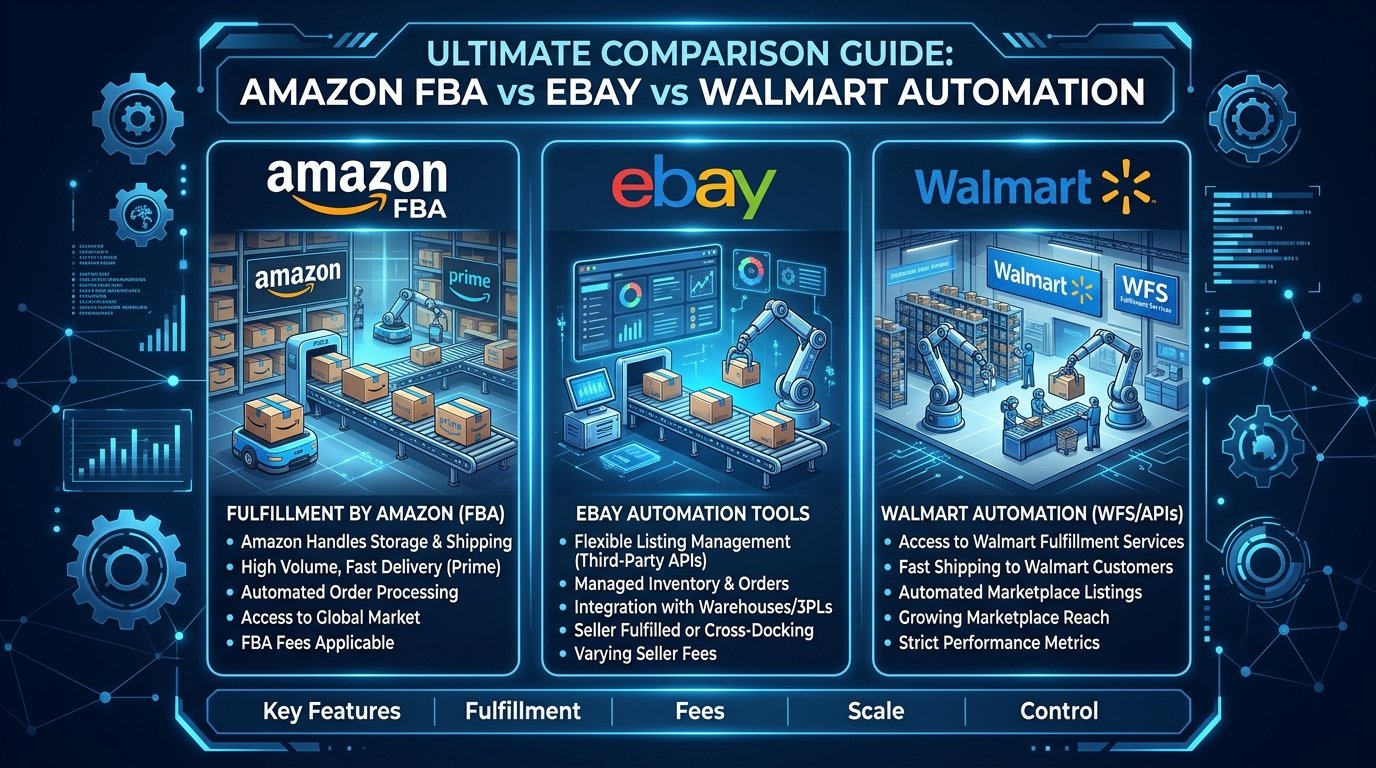
Three of the most popular marketplaces for automation-based ecommerce are:
- Amazon (via FBA automation)
- eBay automation
- Walmart automation
Each platform offers a different level of opportunity, competition, and scalability. But the real question is: which one is actually the best in 2026?
This guide breaks down all three models in detail so you can understand how they work, their pros and cons, costs, risks, and which one fits your goals best.
Understanding Ecommerce Automation Models
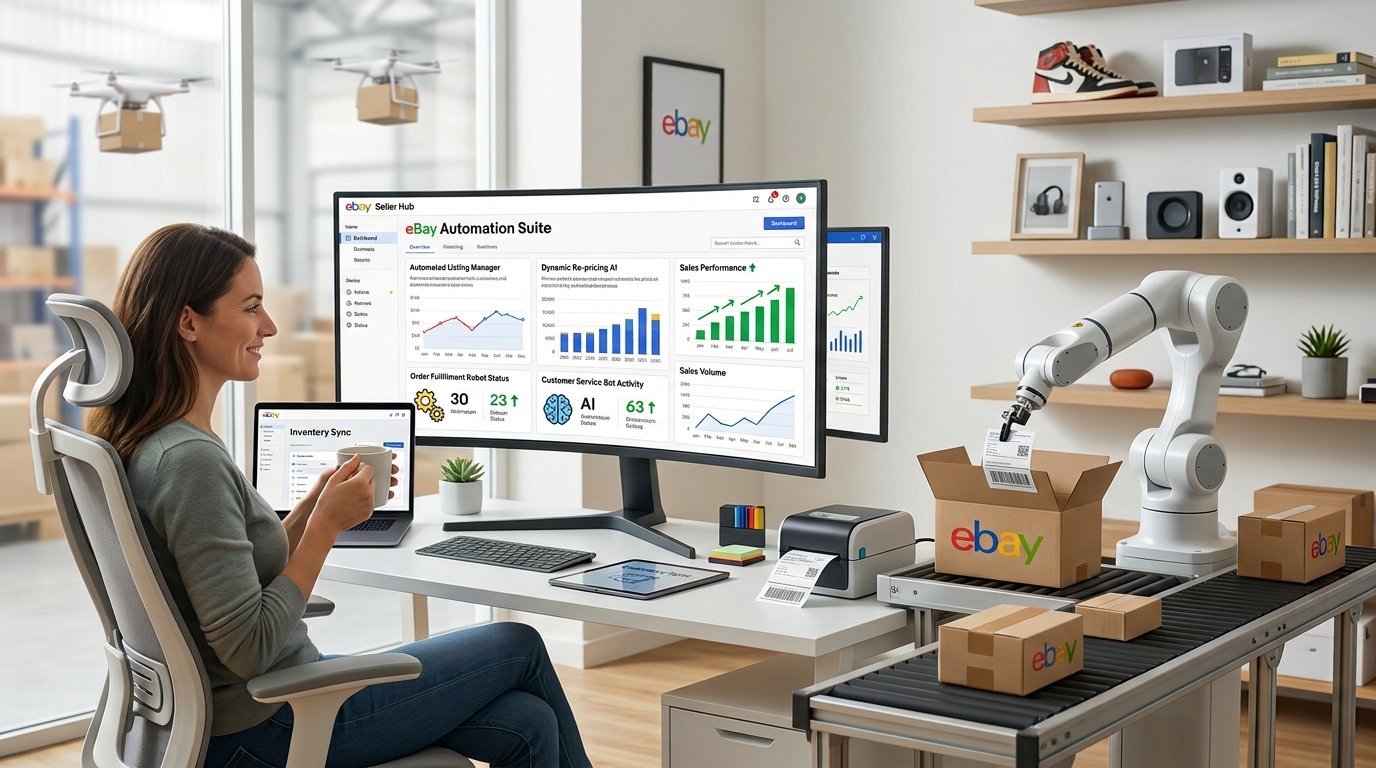
Before comparing platforms, it is important to understand what "automation" means in ecommerce. Ecommerce automation refers to a business system where most operational tasks are handled by software tools, third-party agencies, virtual teams, or AI-based systems.
These tasks include:
- Product research
- Listing creation
- Inventory management
- Order processing
- Customer service
- Pricing optimization
- Advertising management
The goal is to reduce manual involvement and turn ecommerce into a semi-passive income system.
1. Amazon FBA Automation Overview
Amazon FBA automation is built around Amazon's fulfillment system. With FBA, sellers send products to Amazon warehouses, and Amazon handles storage, packing, shipping, returns, and customer support.
Strengths
- Massive global traffic
- Strong buyer trust
- Highly scalable system
- Fast shipping infrastructure
- High conversion rates
Weaknesses
- Very competitive marketplace
- High startup costs
- Strict policies
- PPC dependency
- Inventory risk
2. eBay Automation Overview
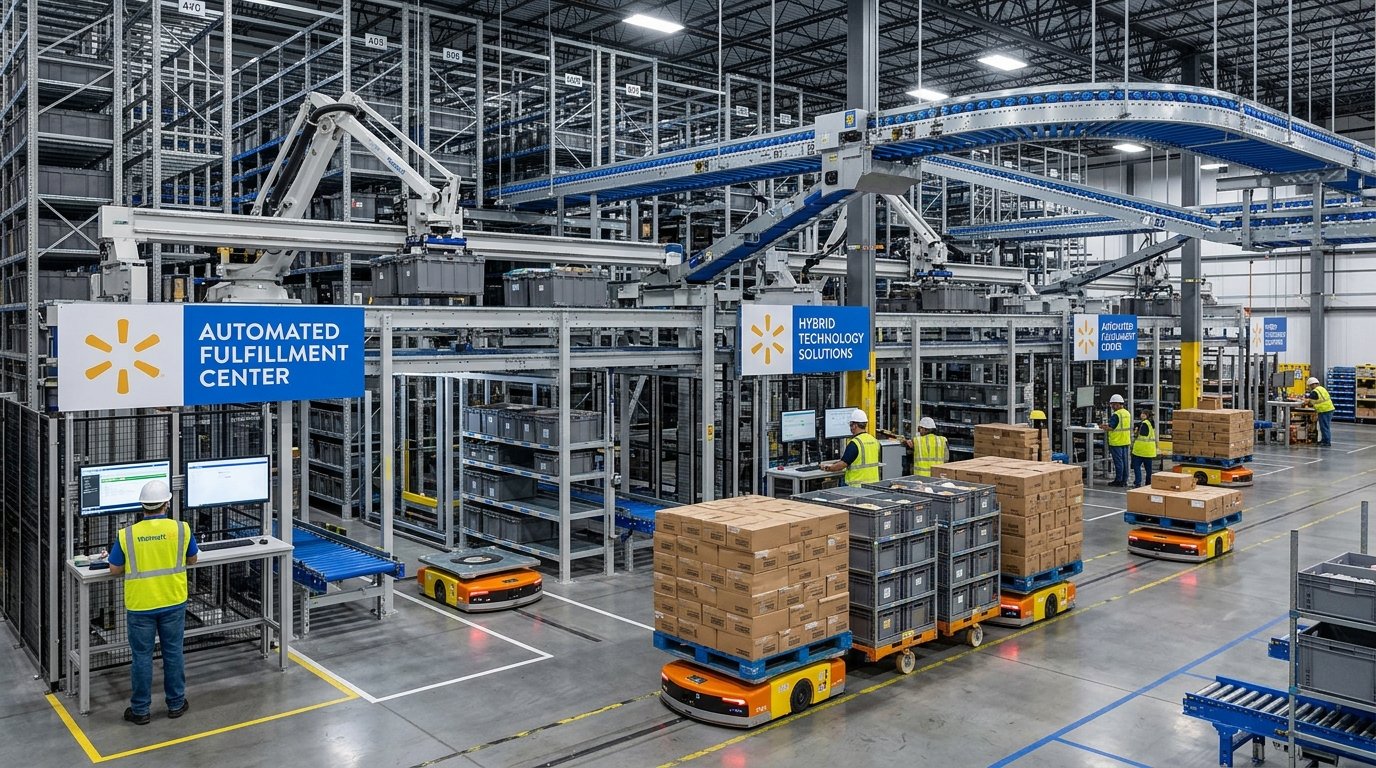
eBay automation is based on managing stores on a flexible marketplace where sellers list products directly.
Strengths
- Low entry barrier
- Easy account setup
- Flexible business model
- Wide product categories
- Lower startup cost compared to Amazon
Weaknesses
- High competition in popular niches
- Risk of account limitations
- Supplier dependency issues
- Lower average order value
- Strict performance metrics
3. Walmart Automation Overview
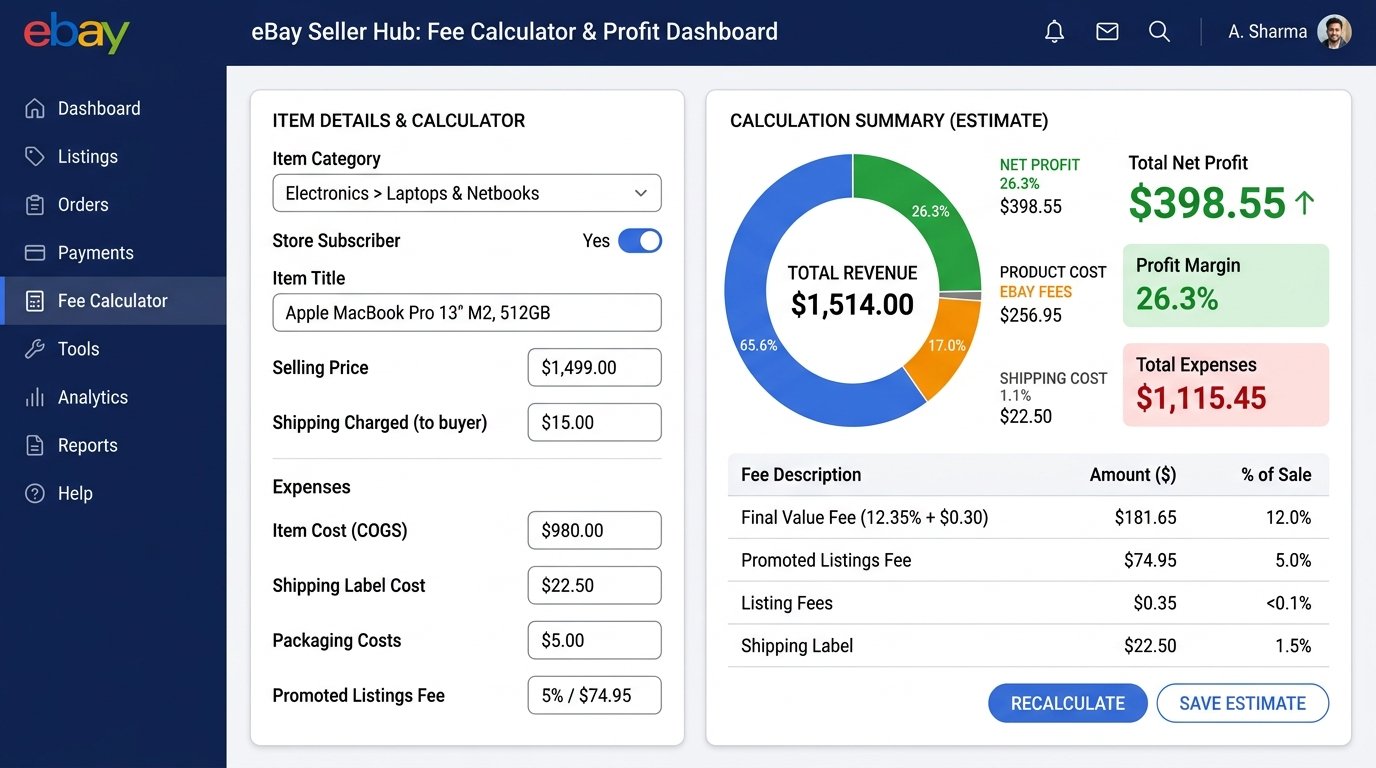
Walmart automation is based on selling through Walmart Marketplace, one of the fastest-growing ecommerce platforms.
Strengths
- Growing marketplace
- Less saturated than Amazon
- High buyer trust
- Strong US customer base
- Walmart Fulfillment Services (WFS) available
Weaknesses
- Strict seller approval process
- Limited global reach compared to Amazon
- Smaller marketplace traffic
- Requires strong compliance
- PPC system still developing
Direct Comparison: Amazon vs eBay vs Walmart
| Factor | Amazon FBA | eBay | Walmart |
|---|---|---|---|
| Startup cost | High | Low–Medium | Medium |
| Competition | Extremely high | Moderate–High | Lower |
| Traffic potential | Highest global | Stable, lower conversion | Growing US-focused |
| Profit margins | 10%–30% | 10%–25% | 12%–28% |
| Ease of scaling | Very scalable but costly | Moderate | High but approval-dependent |
| Automation maturity | Most mature | Highly automatable | Emerging |
Lowest barrier to entry: eBay. Least saturated: Walmart. Highest demand ecosystem: Amazon.
Risk Comparison
- Amazon — high PPC costs, inventory overstock, account suspension risk, strong competition.
- eBay — seller performance penalties, supplier delays, price wars, account limitations.
- Walmart — strict approval system, policy enforcement, smaller traffic base, dependency on compliance.
Which Model Fits You?
- Best for beginners: eBay Automation — low startup cost, easy entry, flexible product selection, less strict approval.
- Best for investors: Amazon FBA Automation — high scalability, strong global demand, proven automation systems, higher revenue potential.
- Best for long-term growth: Walmart Automation — less competition, growing marketplace, strong US retail ecosystem, open opportunity window.
Realistic Expectations
No automation model guarantees passive income. All three require proper product selection, continuous monitoring, strong supplier management, advertising optimization, and risk management. Automation reduces workload — it does not eliminate business responsibility.
Final Verdict
- Amazon FBA Automation → Best for scale and revenue potential
- eBay Automation → Best for beginners and low investment
- Walmart Automation → Best for future growth and lower competition
Best Overall Strategy (2026)
Many successful sellers are not choosing just one platform. Instead they start with eBay (low-cost entry), expand to Amazon (scale revenue), and add Walmart (long-term diversification). This multi-platform approach reduces risk and increases income stability.
Ecommerce automation is not a shortcut — it is a business model shift. The right platform depends on your budget, risk tolerance, experience level, and long-term goals. In 2026, opportunity still exists across all three platforms, but success comes from execution, not just platform choice.