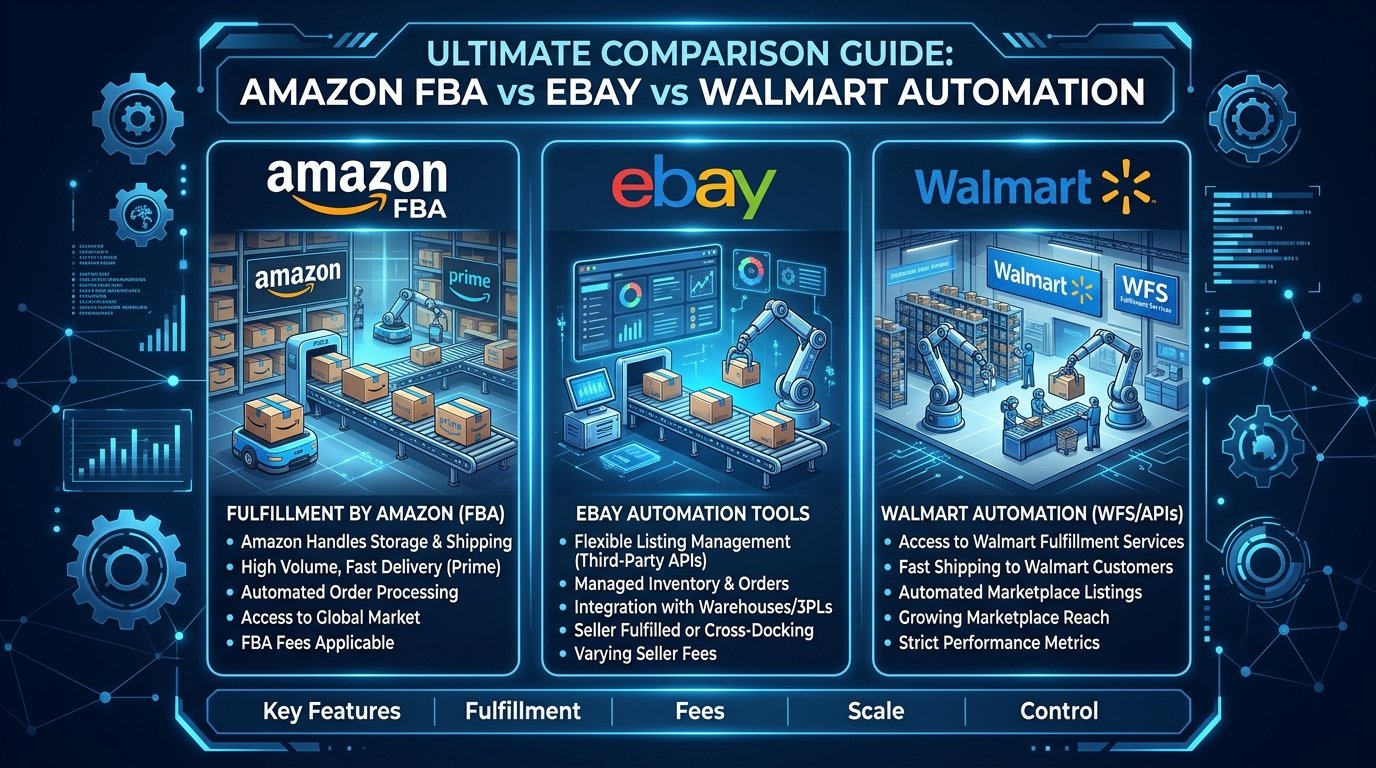
What Is eBay Automation? A Complete Guide for Beginners (2026 Edition)
eBay lets you build a scalable online business without physically handling products. Here's how eBay automation works, and how the daily operations get handled for you.
Introduction
The ecommerce industry has evolved significantly beyond traditional selling approaches. eBay automation represents a system where most of the daily operations of running an eBay store are handled by a third-party service or software-based system.
Understanding eBay as a Marketplace
eBay operates as one of the largest online marketplaces with greater flexibility than Amazon regarding product sourcing, pricing strategies, and listing formats. Sellers can operate through retail arbitrage, wholesale selling, dropshipping, or private labeling.
What Is eBay Automation?
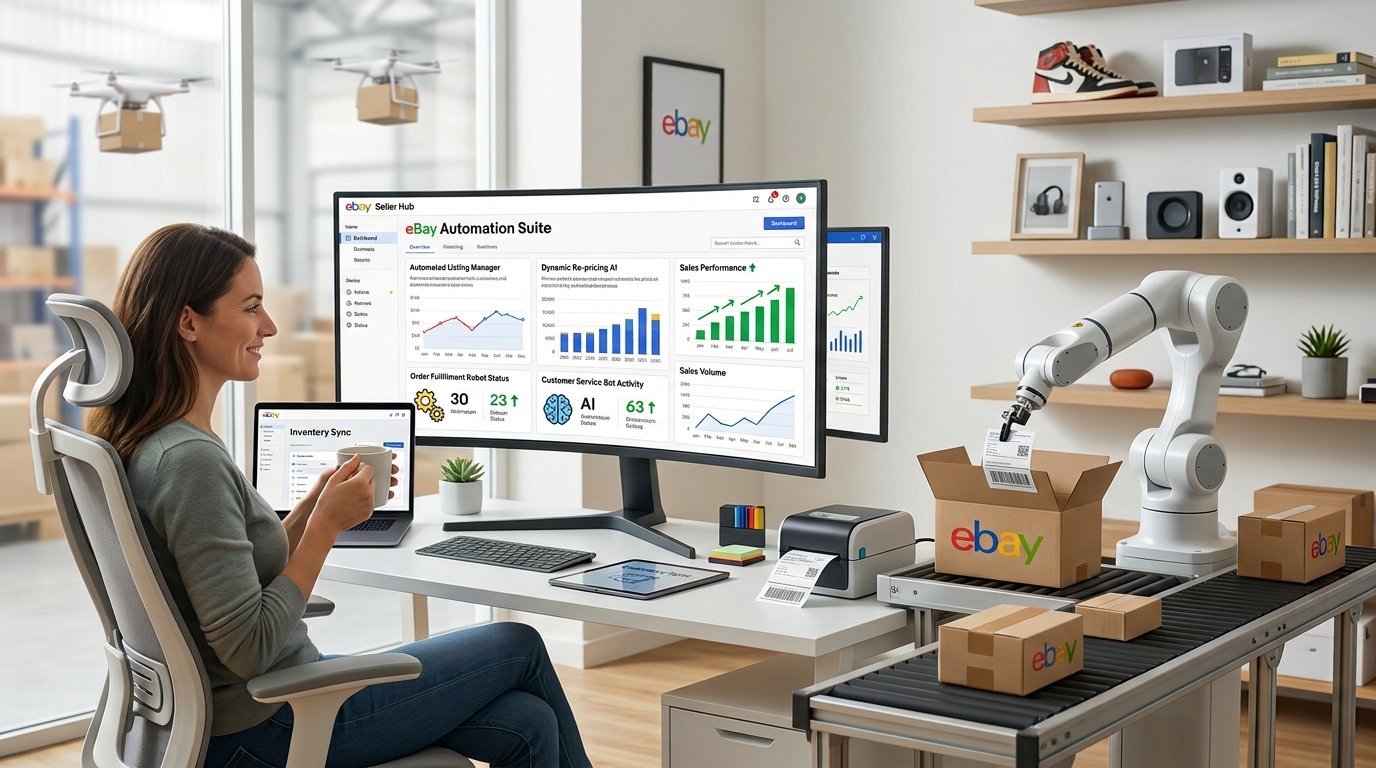
eBay automation delegates operational tasks to systems or management services, handling product research, listing creation, price adjustments, order processing, supplier coordination, customer communication, and inventory syncing. The objective is creating a semi-passive business where owners focus primarily on investment and scaling rather than daily operations.
How eBay Automation Works (Step-by-Step)
1. Account Setup and Store Creation
Create a seller account, configure payment methods, establish store policies, and select a subscription plan.
2. Product Research and Selection
Automation teams identify products with high demand, low competition, good profit margins, reliable supplier availability, and lightweight shipping. Common categories include home goods, electronics accessories, fitness products, pet supplies, and fashion accessories.
3. Supplier Sourcing
Suppliers are identified from wholesalers, AliExpress, local distributors, or private manufacturers — ensuring stable supply, competitive pricing, fast shipping, and return-friendly policies.
4. Listing Creation and Optimization
Products are listed with SEO-optimized titles, keyword-rich descriptions, product images, pricing strategies, and shipping/return policies to improve ranking and conversion.
5. Price Automation and Monitoring
Dynamic pricing systems monitor competitor prices, adjust automatically, maintain profit margins, and optimize visibility through continuous price optimization.
6. Order Processing Automation
Orders automatically forward to suppliers who ship directly to customers, with tracking details updated in the eBay system.
7. Customer Support Handling
Automation systems manage buyer inquiries, return requests, refund processing, and dispute resolution to maintain strong seller ratings.
8. Scaling the Store
Growth strategies include adding winning products, expanding supplier networks, increasing listing volume, improving advertising campaigns, and expanding into multiple accounts where permitted.
Why People Choose eBay Automation
- Low entry barrier — lower startup costs than Amazon FBA, easier account setup, no strict brand registry requirements.
- Flexible business model — supports dropshipping, arbitrage, and wholesale.
- Time efficiency — minimal daily involvement once automated.
- Scalability — more products generate more revenue while automation manages the operational load.
Costs of eBay Automation
Initial investment: store setup fees, inventory costs, automation service fees, and listing optimization.
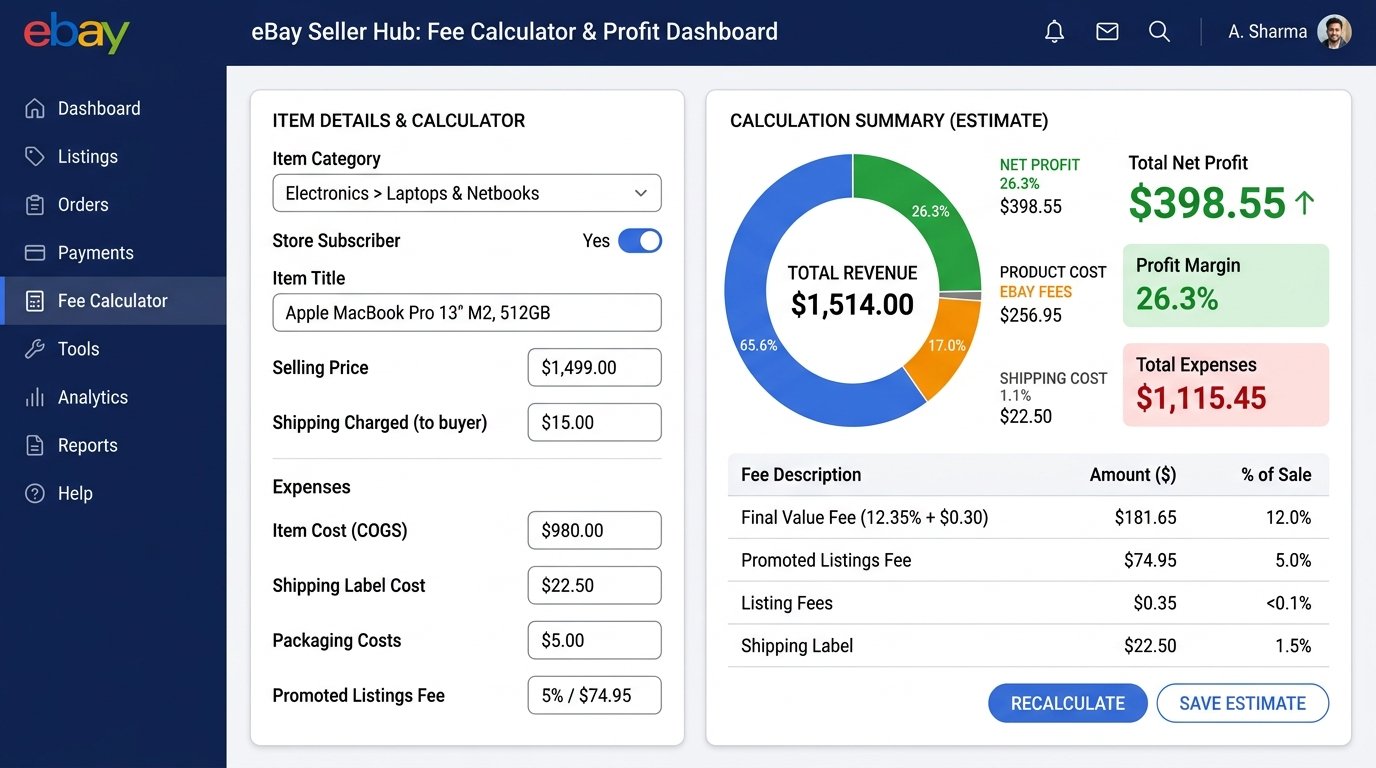
Ongoing costs: eBay subscription fees, product costs, Promoted Listings advertising, software/automation tools, and refund/return losses.
Profit margins: typically 10%–25% for competitive products, with higher margins for niche or branded items depending on sourcing efficiency and competition.
Risks of eBay Automation
- Account suspension risk — poor shipping times, feedback, or policy violations can restrict accounts.
- Supplier issues — stock shortages, delayed shipping, and quality inconsistency.
- Price competition — eBay's competitive environment leads to aggressive undercutting.
- Dependency on providers — underperforming services hurt listings, customer experience, and reputation.
eBay Automation vs Traditional eBay Selling
| Factor | Manual eBay Selling | eBay Automation |
|---|---|---|
| Time required | High | Low |
| Skill required | Medium | Low |
| Control | Full | Shared |
| Scalability | Limited | High |
| Profit potential | Moderate | High |
Who Should Consider eBay Automation?
This model suits beginners in ecommerce, investors seeking passive income systems, people with limited time, and entrepreneurs wanting multiple income streams. It is unsuitable for those expecting guaranteed profits, unwilling to invest upfront, or wanting full operational control.
Final Thoughts
eBay automation functions as a semi-managed ecommerce system combining marketplace traffic, automated listing and pricing, supplier-based fulfillment, and customer service handling. Proper execution can create a scalable income model — though, like any business venture, success requires strategy, monitoring, and proper implementation.